
Estate Planning · July 03, 2026

Life changes quietly. Your estate plan usually doesn't. A new grandchild, a second marriage, a growing business, or even a new bank account can slowly create gaps you never intended. The danger is not forgetting to create a plan. It's believing the one you signed years ago still protects the life you're living today. The families who avoid court, conflict, and costly surprises are rarely the lucky ones. They are the ones who realized their plan needed to grow before life changed again.
Business · June 22, 2026

Raising the estate tax exemption sounds like good news, and for many business owners, it is. But while everyone celebrates the headline, a quieter tax change is already reshaping some business succession plans. Certain trusts can now face new deduction limits at surprisingly low income levels, changing what ultimately reaches the next generation. The biggest risk may not be the law you know about, but the one you never thought to ask about.
Estate Planning · June 19, 2026

Divorce changes your life. It does not automatically change your estate plan. Old beneficiary designations, outdated wills, and missing trusts can quietly leave your children, not your ex, paying the price. The hardest part is that everything may look updated until the day your plan is actually needed. Real protection begins where the divorce decree ends, and that is the part too many fathers never see coming.
Estate Planning · June 15, 2026

Every father has an answer when asked who would raise his children if something happened to him. For most, that answer lives in a conversation, a shared understanding, or simply in their own mind. The problem is that none of those carry legal authority. If you haven't named guardians and prepared for what happens in the first hours after an emergency, your family could be left navigating court proceedings and uncertainty when they need clarity most. The greatest risk isn't not having an answer.
Estate Planning · June 12, 2026

For many LGBTQIA+ individuals and families, marriage equality brought an important sense of security. But legal recognition and thoughtful planning are not always the same thing. If an unexpected illness, accident, or death occurs, healthcare decisions, inheritance, parental rights, and the people you trust most may depend on much more than your marital status. The greatest risk is not what the law protects. It's assuming the law protects everything.
Estate Planning · June 08, 2026

You spend months preparing your child for college. Dorm supplies, class schedules, meal plans, and move-in day all get carefully planned. Then, almost overnight, the law changes your role completely. If your child is hospitalized, unable to manage finances, or facing an emergency far from home, you may discover that being a parent no longer gives you the authority you thought it did. The families who struggle most are often the ones who believed they had more access than they actually do. And th
Business · June 05, 2026

Helping your child through college often feels like a personal expense. For some business owners, it may be hiding in the wrong place entirely. A little-known IRS strategy could allow a family business to pay up to $5,250 of an adult child's qualified education expenses tax-free, but only if the structure, employment status, and paperwork are handled correctly. The opportunity is not the benefit itself. It's knowing the rules before an innocent shortcut turns a tax-saving strategy into an expens
Estate Planning · June 01, 2026

For many LGBTQIA+ non-biological parents, love and commitment define what it means to be a family. Unfortunately, the law doesn't always see it that way. If your parental rights haven't been properly established, an unexpected illness, emergency, or legal dispute could put important decisions about your child into someone else's hands. The greatest risk isn't loving your child any less. It's assuming the law automatically recognizes the family you've worked so hard to build.
Business · May 22, 2026

That moment right before vacation feels like relief. The bags are packed, the calendar is cleared, and for a second, you finally exhale. Then a quieter thought slips in: what happens to the business if you cannot come back next week? Not emails. Not meetings. Real authority. Payroll. Contracts. Client work. Most business owners have an out-of-office message, but no actual business incapacity plan. And the difference between those two things only matters when it suddenly matters most.
Estate Planning · May 18, 2026
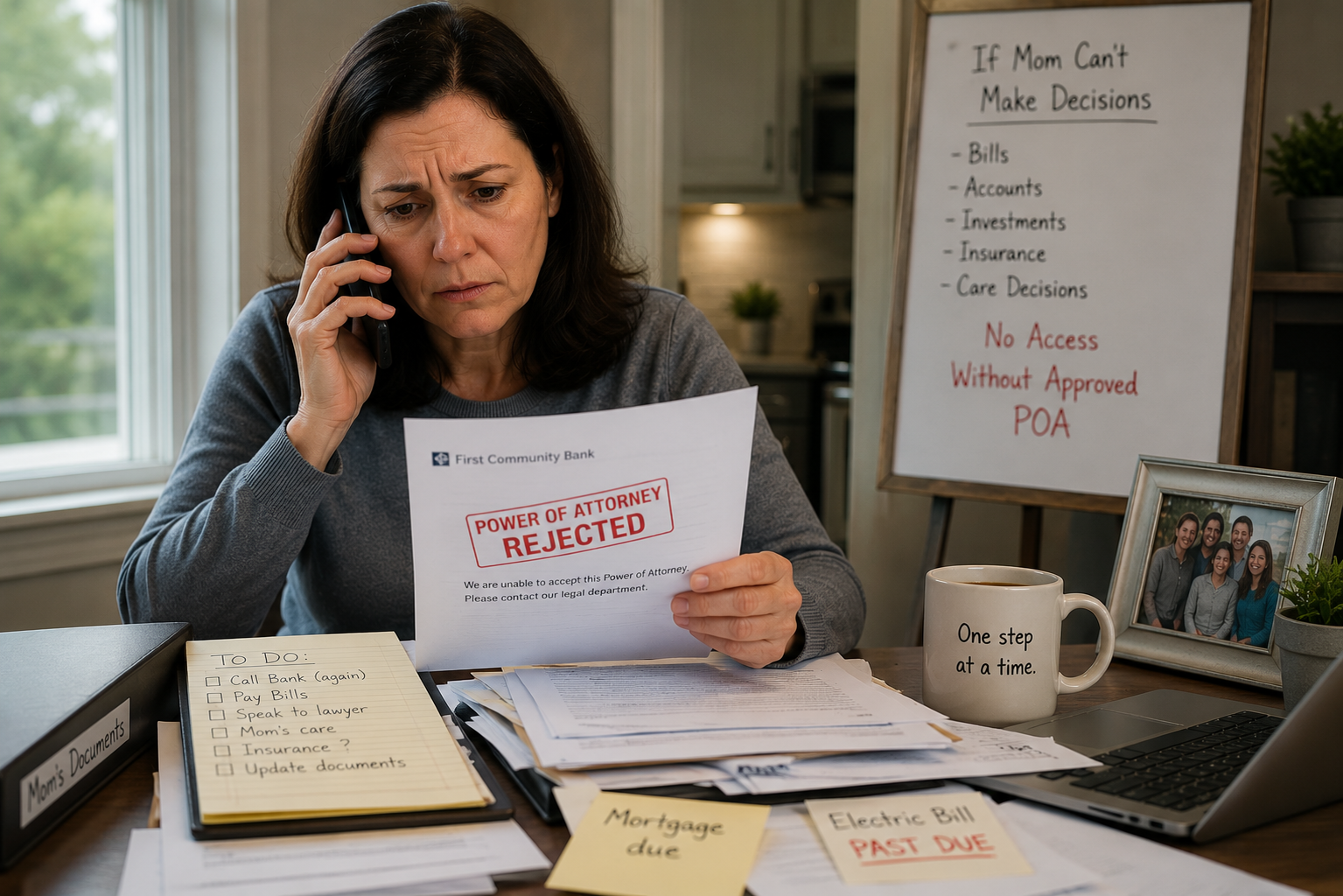
You signed a Power of Attorney years ago and felt relieved knowing it was handled. That sense of security is exactly what catches many families off guard. A valid POA can still be rejected when someone is hospitalized, leaving loved ones unable to access accounts, pay bills, or make financial decisions when they matter most. The risk is not having no plan. It is believing a document is a plan. And the difference between those two things often shows up at a bank counter during a crisis.